The stories we leave behind
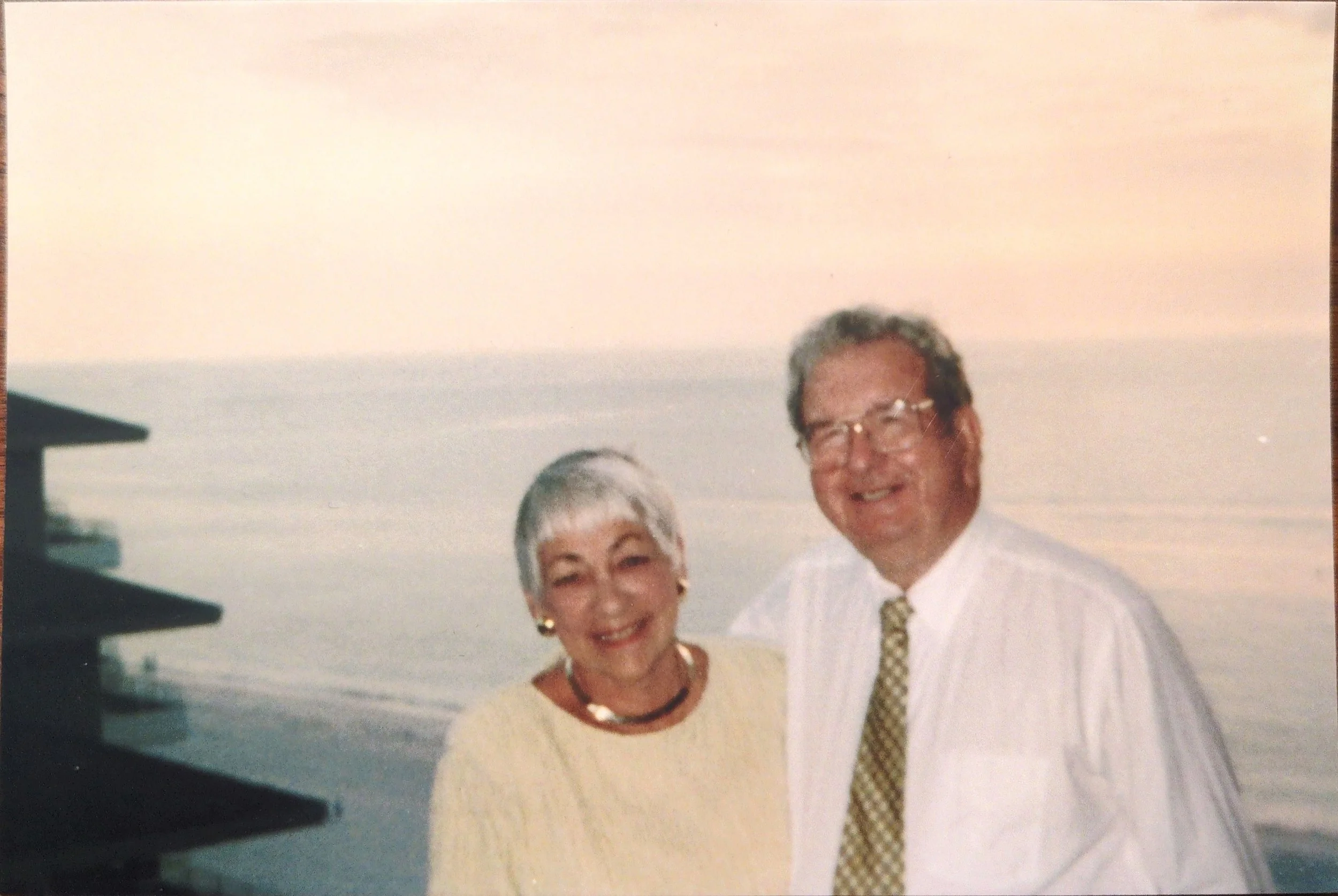
My grandfather, TAG, was larger than life. He was a very serious and successful businessman who, in some ways, ran his family a little like a company. Beneath the stern exterior, there was evidence (sometimes subtly) of a big teddy bear. In my memories, TAG (which is an acronym for his name, Thomas A. Gannon) was an uncompromisingly ethical and faithful man who extolled the importance of education, hard work and family.
My grandmother, Gran, was the heart of the operation. Whip-smart, she loved her New York Times, her morning cigarette and her evening cocktail. She adored her kids and grandkids, and her world centered around the family. She instilled in all of us a deep love for her maraschino cherry cookies, made unnaturally pink thanks to red food coloring. Even the non-bakers in our family still bake these, because of the memories and love they represent. Also, they’re delicious.
One of the most cherished heirlooms my grandparents left behind is my grandfather’s autobiography, which my mom helped him write. TAG dictated his life story, and my mom diligently transcribed his words. She packaged it in a humble, blue book with black comb binding, alongside the story of my great-uncle, Bob. It’s about 40 pages, altogether.
I first read the text when I was in my 20s. I returned to it in my 30s. And earlier today, I took the time to read it all again. What a different meaning it holds now that I’m in my late 40s.
How stories change with time
Of course, the text didn’t change over the years. But my experiences and perspective have. In my early 20s, my grandparents were untouchable (and, sure, they felt a bit out of touch, because, you know, I was so cool). They’d told me stories about growing up, of course. I knew that my grandfather’s mother died when he was young, and his dad raised him and his younger brother during the Depression. I knew my grandmother loved New York and lived there for many years, and that she worked in the Empire State Building in 1945 when a military plane accidentally flew into it. Thankfully, she was on a coffee break at the time. I knew my grandfather served in the Air Force and flew a plane before he’d ever driven a car. These were stories they told over the years, and I’m not sure I ever asked them to expand on what they readily shared.
Looking back, I wish I’d asked more questions. But also, I was a kid.
Thanks to the book, I’m grateful to have at least some of the answers. The book paints a colorful story of two people, very much in love, who faced enormous hardships, took chances, suffered losses, counted blessings, welcomed children and then grandchildren and looked back on all of it with enormous pride and satisfaction. It talks in depth about my grandfather’s war experiences, which could be harrowing and grim, but also joyful. It talks about my grandparents’ wedding and their “honeymoon,” spent on an overnight train from New York to Chicago, where they would begin their life together in a teeny-tiny “no-bedroom” apartment. It talks about his business ventures, which I knew had been successful; however, I never realized that things could have taken a turn for the worse many times over. My grandfather wasn’t just a bold man. He was also very, very lucky.
An opportunity for reflection
At the end of the book, my grandfather talks about the process of sharing his stories and how it caused him to reflect quite a bit. He thanks my grandmother for more than a half-century of love, faith, confidence and understanding (she definitely earned that thanks). And he passes along some lessons he’s learned along the way. The one I love most is this: “The Golden Rule is still the essence of a good life.”
I’m grateful that my mom took the time to get this all on paper so my sister and I and our cousins have it to reflect on and one day pass along. Memories, as we all know, are tricky. We hold onto some things and let go of others, seemingly at random. A book takes the pressure off. It serves as a vault for stories that we can return to time and again.
Lately, I’ve been thinking about this book from a different perspective. For many years, I’ve been an author myself. And recently, I’m getting a lot of interest from families who want me to record their history so they can share it with future generations. It’s become something of a trend, it seems, and the Wall Street Journal has even written about the practice.
When I’m working on these projects, I spend many hours with the subjects, asking them about their parents and grandparents, their childhoods, their loves, their work, their children and grandchildren. I inquire about the ways times have changed, and explore what really matters. The end product—the manuscript—is a gift that will be passed along to future generations. And I’ve learned that the process is also a gift. It’s a chance to reflect and relive memories, and to process their experiences and what it all might mean. The book offers them an opportunity to communicate advice or wishes with grandchildren, or to simply put to paper stories that might otherwise be lost.
A vault of memories
After my grandparents died, I was able to select a number of things from their lives that had meaning. I kept my grandfather’s desk because it represented strength; I kept my grandmother’s upholstered chair because it showcased her creativity and flair; I kept letters from them both because their handwriting feels so very personal and representative and real.
But more than any of these, having access to my grandfather’s words and stories really is the greatest keepsake of all.
And now, being able to work with other families to keep memories alive is the greatest honor of my career.